↵
What Every Parent Needs to Know
A True Story
Oh God, Make Me lighter skinned….
The Prayer on the Steps
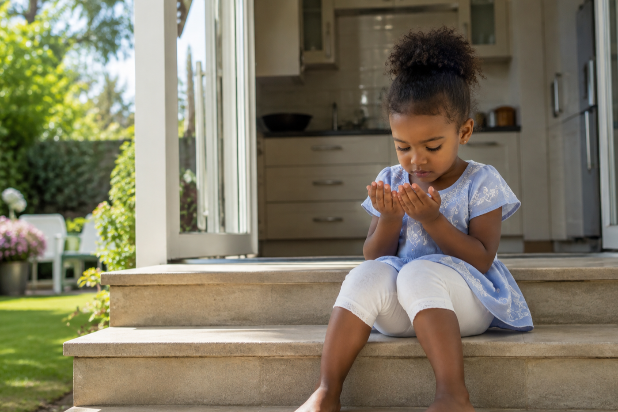
When I was three years old in the 1960s, my parents found me sitting on the kitchen steps, holding my two palms up in front of me, fervently praying.
I was asking God to make me lighter skinned.I was asking Him to make my mother and father lighter skinned.
They were shocked.
They couldn't understand why I was doing this.
I don't remember exactly what happened at school. But I know it had something to do with the other children.
They didn't want to play with me because of the colour of my skin.
At three years old, I had already learned that my skin made me different.
I had already learned that being different meant I didn't belong.
And somehow, I had already learned the thing that needed to change...
was me.
That feeling never completely went away.
Even now, I sometimes walk into a room where no one looks like me and that three-year-old child comes back.
I became conscious of myself.
I wonder if I belong.
I wonder if I will be accepted.
So sometimes, I avoid those spaces altogether.
My parents never knew what was happening to me at school.
If they had known, perhaps things would have been different.
But that's the thing about a child's pain.
Sometimes, they don't know how to tell you they're hurting.
Sometimes...
they just pray to become someone else.
.I share this story because I want to help you see what I couldn't tell my own parents.
I want to help you recognise the signs that your child might be struggling.
Why This Matters
Bullying is not just a "phase."
It's not something children "just get over."
It has lifelong consequences—on mental health, self-esteem, relationships, and even physical health.
Consequence | Impact |
Anxiety | Persistent fear of social situations, school avoidance |
Depression | Withdrawal, sadness, loss of interest in activities |
Low Self-Esteem | Belief that they are unworthy, unlovable, wrong |
Academic Decline | Difficulty concentrating, falling behind |
Suicidal Ideation | In extreme cases, thoughts of self-harm |
Children who are bullied are more likely to:
Experience depression and anxiety
Have poor academic outcomes
Struggle with relationships
Suffer from long-term mental health issues
What Children Often Don't Say
Children often don't tell their parents they are being bullied.
Why?
Reason | Why It Happens |
Shame | They believe the bullying is their fault |
Fear of Retaliation | They think the bullying will get worse |
Fear of Disappointing | They don't want to worry their parents |
Loss of Control | They think telling won't change anything |
Minimisation | They think it's "not that bad" |
That's why you need to recognise the signs.
The Signs Your Child Might Be Struggling
Physical Signs
Sign | What to Look For |
Unexplained Injuries | Bruises, cuts, scratches they can't explain |
Damaged Possessions | Torn clothing, broken items, missing belongings |
Frequent Headaches | Complaints of headaches or stomach aches before school |
Loss of Appetite | Not eating, skipping meals |
Sleep Disturbances | Difficulty sleeping, nightmares, bedwetting |
Somatic Complaints | Physical symptoms without medical cause (e.g., stomach pain, headaches) |
Bruises/Cuts | Unexplained injuries |
Behavioural Signs
Sign | What to Look For |
School Refusal | Faking illness, making excuses to avoid school |
Declining Grades | Sudden drop in academic performance |
Loss of Interest | No longer enjoying activities they used to love |
Withdrawal | Avoiding friends, family, social situations |
Aggression | Becoming angry, irritable, or defensive |
Loss of Belongings | "Losing" money, phones, or valuables |
Changes in Eating | Skipping meals, overeating, dramatic weight changes |
Emotional Signs
Sign | What to Look For |
Anxiety | Excessive worry, fear of going to school |
Depression | Persistent sadness, hopelessness, loss of interest in activities |
Mood Swings | Unpredictable emotions, irritability, anger |
Low Self-Esteem | Negative self-talk, belief that they are "wrong" or "bad" |
Helplessness | Feeling like they can't change their situation |
Fear of Social Situations | Avoiding school, avoiding peers, avoiding social events |
Suicidal Ideation | Talking about hurting themselves, giving away belongings, saying goodbye |
Step 1: Create a Safe Space
Action | How to Do It |
Choose the Right Time | Talk when you're both calm, not during conflict or stress |
Ask Open-Ended Questions | "How is school going?" "How are things with your friends?" |
Listen Without Judgement | Let them speak without interrupting or minimising |
Validate Their Feelings | "That sounds really hard." "I'm so sorry you're going through this." |
Reassure Them | Tell them it's not their fault. The bullying is not their doing—it's the bully's behaviour. |
Do Not Pressure | If they don't want to talk, let them know you're available when they're ready |
Step 2: Communicate with the School
Action | How to Do It |
Contact the Teacher | Express your concerns without blame |
Document Everything | Keep a record of incidents, dates, and communications |
Request a Meeting | Meet with the teacher, school counsellor, or principal |
Request a Safety Plan | Ask for a plan to protect your child |
Follow Up | Check in regularly with the school |
Step 3: Support Your Child at Home
Action | How to Do It |
Be Present | Spend time with your child doing activities they enjoy |
Build Resilience | Encourage friendships, hobbies, and activities outside school |
Teach Coping Skills | Help them develop strategies for managing stress and anxiety |
Consider Therapy | Professional support can help them process trauma and build confidence |
Model Healthy Relationships | Show them what respect and kindness look like |
Step 4: Consider Medical and Psychological Support
Action | How to Do It |
Check in with a Doctor | Physical symptoms like headaches, stomach aches, or sleep issues can be signs of stress |
Talk to a Mental Health Professional | A therapist or counsellor can help your child process trauma |
Regular Health Check-ups | Monitor changes in eating, sleep, and mood |
Monitor Mental Health | Look for signs of anxiety, depression, or withdrawal |
Contact Quick Health Doctors | We can connect you with specialists who support children and families |
What Does Recovery Look Like?
Stage | What It Looks Like |
Safety First | The bullying stops. The child feels physically and emotionally safe. |
Healing Begins | The child starts to trust again—other people, school, their own worth. |
Confidence Returns | They begin to believe in themselves again. They laugh freely. They make friends. |
Reintegration | They return to school, social activities, and a normal routine. |
Thriving | They are not just surviving—they are growing, learning, and flourishing. |
How Quick Health Doctors Can Help
Service | How It Supports |
Pediatric Consultations | We can assess physical symptoms like headaches, stomach aches, or stress-related conditions |
Mental Health Support | Our specialists can help your child process trauma, build resilience, and develop coping strategies |
Child Development Assessments | We can evaluate your child's emotional, social, and psychological development |
Referrals | We can connect you with trusted specialists, including psychologists and counsellors |
Family Support | We can support you as a parent, helping you navigate the emotional and practical challenges |
How to Reach Us
WhatsApp: +254 716 334 657
Website: https://quickhealthdoctors.com/ https://quickhealthdoctors.com/qrcode
https://quickhealthdoctors.com/patient-registration
Final Word
My parents didn't know what was happening to me at school.
They loved me. They wanted the best for me. They just didn't see the signs.
Maybe if they had known what to look for, things would have been different.
Maybe I wouldn't have spent a lifetime carrying the weight of that feeling—that I was wrong, and I needed to change.
Don't wait until it's too late.
Learn the signs.
We are here to help 24/7 talk to us, we have specialists who can support you.